
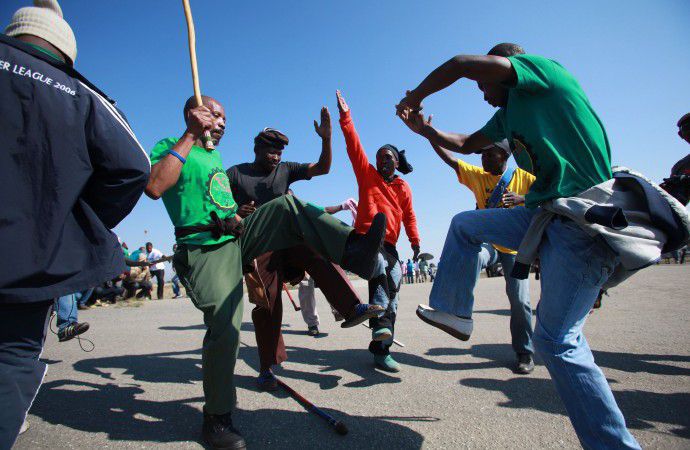
The South African economy lost a total of 946 323 working days as a result of 122 work stoppages in 2016
The Department of Labour has warned that continuous labour protests have cost the sector and the country’s economy millions of rands.
The department released it’s 2016 annual Industrial Action report, in which it highlights the findings of the strike incidents.
It said the South African market lost a total of 946 323 working days as a result of 122 work stoppages, which represents a 4,7% increase in working days lost when compared to the 903 921 days lost in 2015.
“In terms of wages lost, the South African labour economy lost approximately R161 million due to work stoppages in 2016, as compared to R116 million in 2015. This reflects an increase of 38,8% in wages lost due to work stoppages,” it said.
The report highlighted that more work stoppages were experienced during the strike seasons – the second and third quarters of the year.
According to the department, strikes in a company only were predominantly higher, contributing to 56% of strikes that took place in 2016, followed by those workers who were locked out, at 26%.
“Most of the work stoppages were due to wages, bonus and other compensation demands. The time-loss ratio was at 59 working days lost per 1 000 employees,” it said.
A total of 7,6 million working hours were lost in 2016 as compared to a total 8,2 million working hours lost in 2015. There were 90 228 workers involved in labour disputes in 2016, the lowest figure since strike records were first captured in 2013.
Gauteng and KwaZulu-Natal experienced more strikes in all the four quarters of 2016.
The department said the strike report remains a useful piece of up-to-date information for various stakeholders, including government departments, unions, employers, business, international organisations, research institutes, NGOs and students.
It further provides a detailed account of companies affected by work stoppages and disaggregates information by province, duration, industries, nature and reasons for strikes.
The department stressed that in order to reduce strike incidents related to wage demands, possibilities of increasing minimum wages to address poverty and inequality and expanding provision for retirement savings for low-income workers will become a sharp focus in the future.
“South Africa needs to find a solution for the seemingly faltering bargaining structure. Government, unions and business have an important role to play in order to maintain a stable labour force and fair labour practices that will attract investors and inspire economic growth in the long run.”
Courtesy : www.destinyconnect.com